Move-Up Buyers
Sell First or Buy First? The 3 Factors That Decide for Move-Up Buyers
 Emmett Dempsey · NMLS #208522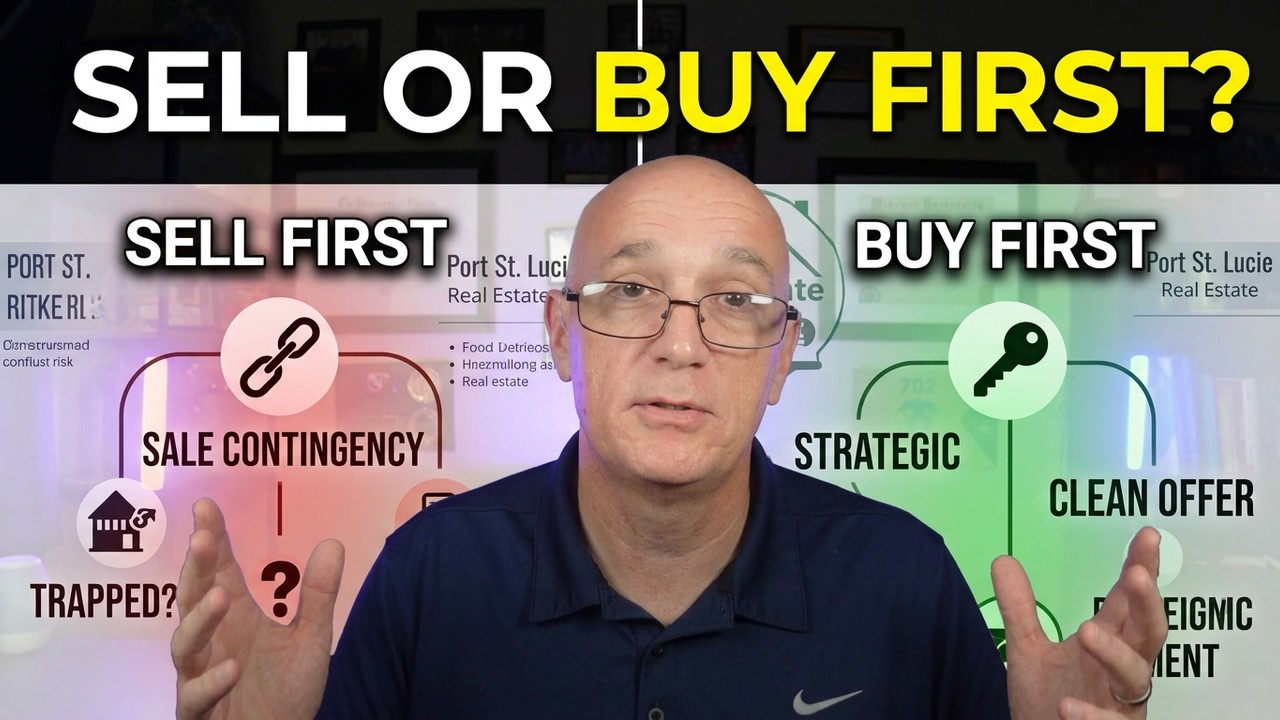
Should I sell my current home first or buy my next home first?
There is no single right order for everybody. The decision comes down to three things: how much equity you can actually get out of your current home, how many homes are for sale in your target neighborhood, and how competitive that neighborhood is. If your down payment is locked in your current home, sell first. If you can free up cash without selling and the area is competitive, buy first.
Should I sell my current home first or buy my next home first?
There is no single right order for everybody. The decision comes down to three things: how much equity you can actually get out of your current home, how many homes are for sale in your target neighborhood, and how competitive that neighborhood is. If your down payment is locked in your current home, sell first. If you can free up cash without selling and the area is competitive, buy first so you move only once and your offer actually wins.
In a Port St Lucie market where homes are sitting closer to 90 days again, buying your next home before you sell your current one is not the reckless move people assume it is. It might be the only move that keeps you from moving twice. And if you own a home here with a low rate and a pile of equity you cannot touch, that one decision, which house goes first, is worth more to your family than the rate you are so afraid of losing.
Who is this actually for?
You own a home. You have real equity in it. And you have outgrown the place. Maybe there is a kid who needs their own room. Maybe you are working off the kitchen table because there is nowhere else. Maybe a parent is moving in. You want the bigger house. You can see it. But every time you start to move, you hit the same wall.
You cannot buy the next one until you sell this one. And you are scared to sell this one until you know where you are going. That is the whole trap.
Almost every article you find online is written for a first-time buyer. None of it is written for the person who already owns and just needs to trade up. So you sit. Another year goes by. The house gets smaller.
Anyone who tells you "always sell first" or "always buy first" is guessing. Let me break down the three factors that actually make the decision.
How do I calculate my real home equity?
Start with your equity. Not the number an online estimate shows you. The real number.
Here is how that math works. Take what your home would sell for. Subtract what you still owe. Then subtract the cost of selling, which in Florida usually runs around 8 to 10 percent of the price once you count agent commissions and closing costs. What is left is your net at closing. That is the cash that actually shows up in your account, and it is the number that decides whether you even can buy first.
Because here is the thing about your down payment. If your entire down payment for the next house is locked inside the walls of this house, you literally cannot make an offer until that equity comes out. And equity only comes out when you sell. In that situation, selling first is not weakness. It is just how the money works. You sell, you get your proceeds, you shop with cash in hand, and you rent short term or negotiate a rent-back from your buyer so you are not on the street.
Now flip it. Say you have other resources: reserves, a HELOC on the current home, or enough income to carry both payments for a stretch. A HELOC is just a line of credit against the equity in your home, like a credit card that uses your house as the limit. The Consumer Financial Protection Bureau has a plain-English breakdown of how these work. If you can free up the down payment without selling, buying first becomes the smarter play.
How does neighborhood inventory change the decision?
Inventory is just how many homes are actually for sale in the neighborhood you want.
When there are very few homes for sale, selling first is dangerous. You sell your house, the clock starts, and now you are racing to find something you love before you have to be out. If nothing good is on the market, you are forced to either overpay for the wrong house or move into a rental with all your stuff in boxes. That is the nightmare scenario, and in a tight neighborhood it is very real.
But when inventory is looser, like a lot of Port St Lucie is right now with homes taking longer to sell, you have breathing room. You are not one of twenty offers anymore. You can take your time. That changes the whole calculation.
Why does a sale contingency make my offer lose?
Picture two offers landing on a seller's desk on the same house. Yours says "I will buy your home, but only after my current home sells." The other one has no strings attached. Which one wins? Every time, it is the clean one.
That string, the one that says your purchase depends on selling your house first, has a name. It is called a sale contingency. In any neighborhood with real demand, a contingent offer gets beaten by buyers who do not have a home to sell.
So if you are chasing a house in a hot pocket of Port St Lucie, writing a contingent offer is how you keep losing homes you love. That alone can push you toward buying first, even if selling first feels safer emotionally.
So how do the three factors come together?
Separately these factors are just noise. Together they tell you exactly what to do.
If your down payment is trapped in the house, inventory is decent, and you are okay renting for a bit, sell first. Clean and simple. If inventory is tight, you can free up the cash without selling, and the neighborhood is competitive, buy first so you only move once and your offer actually wins.
And here is the part I really want you to hear. You are not actually stuck because of your rate. Giving up a low rate feels like setting money on fire, but your rate is one number in a much bigger equation. The thing that has kept you frozen is that no one ever laid out the sequence: the order of operations for going from this house to the next one without ending up homeless, without double-paying blind, and without writing offers that get thrown in the trash.
Can I really buy before I sell?
Yes. There is a way to buy the next home before you sell this one. You close on the new house first, move on your own timeline, then sell the old one without the pressure of a clock running.
Some setups even let you recast the loan after the old house sells, which just means once you put that sale money into the new mortgage, the lender recalculates your payment down. You are not stuck with a big payment forever. Fannie Mae explains loan recasting as part of standard servicing options.
One number to understand here is your debt-to-income ratio, which is just how much of your monthly income already goes to payments. It is what tells us if you can carry both houses even for a short window. The CFPB has a clear guide on debt-to-income if you want to see how it is figured.
That whole sequence is exactly what I walk families through in what I call the Path Home Method. We start by talking through your goals and your pain before we touch a single number. Then we find the real blocker, whether it is cash for the next home, your debt-to-income from carrying two payments for a bit, or the fear of a contingent offer. Then we lay your options side by side so you can choose with your eyes open.
What should I do next?
Do not do your own scary math at midnight and talk yourself out of the move again. Do not casually browse listings for another year while the house gets smaller.
Want to see how the numbers shake out for your situation? Book a time to talk and bring your real numbers. Bring your equity, your target neighborhood, and I will show you the actual sequence that gets you from this house into the next one.
Frequently asked questions
How do I figure out my true home equity before selling? +
Take the realistic sale price of your home and subtract what you still owe on the mortgage. Then subtract the cost of selling, which in Florida usually runs about 8 to 10 percent of the price once you add agent commissions and closing costs. What is left is your net at closing, the actual cash that lands in your account. That net number, not an online estimate, is what determines whether you can afford the down payment on your next home before you sell.
What is a sale contingency and why do those offers lose? +
A sale contingency is a condition in your purchase offer stating that you will only buy the new home after your current home sells. It protects you, but it makes your offer riskier for the seller because your ability to close depends on something outside their control. In any competitive neighborhood, sellers pick clean offers with no strings attached over contingent ones. That is why move-up buyers in hot pockets keep losing homes they love when they write contingent offers.
Can I use a HELOC to buy before I sell? +
Often yes. A HELOC is a line of credit secured by the equity in your current home, similar to a credit card that uses your house as the limit. If you can draw on that line to cover your down payment, you free up the cash needed to make a clean, non-contingent offer on the next home without selling first. Whether this works depends on your equity, your income, and your debt-to-income ratio, so it is worth reviewing your full picture before relying on it.
What does it mean to recast my mortgage after selling? +
Recasting means that after your old home sells, you apply the sale proceeds as a large lump sum to your new mortgage. The lender then recalculates your monthly payment based on the lower remaining balance while keeping the same rate and term. This is helpful for buy-before-you-sell buyers because it lets you close on the new home with a larger loan up front, then reduce your payment once the old home closes. Not every loan allows recasting, so confirm the option before you commit.
Is it safer to sell first or buy first? +
It depends on your situation, not on a blanket rule. Selling first is safer when your down payment is locked in your current home and there is decent inventory, because you shop with cash and avoid double payments. Buying first is safer when the neighborhood is competitive, inventory is tight, and you can free up cash without selling, because you avoid contingent offers and only move once. The right choice comes from weighing your equity, local inventory, and neighborhood demand together.
Do I lose my low interest rate if I move up? +
You will take on a new rate for the new home, but your rate is only one number in a much larger equation. For many move-up families, the value of getting the right home, moving only once, and winning with a clean offer outweighs the difference in rate. Strategies like recasting can also lower your payment after your old home sells. The bigger mistake is staying frozen for years in a home that no longer fits because you focused on the rate alone.
Sources
- What is a home equity line of credit (HELOC)? — Consumer Financial Protection Bureau
- What is a debt-to-income ratio? — Consumer Financial Protection Bureau
- Originating and Underwriting Mortgage Products — Fannie Mae
About the author
Emmett Dempsey — Mortgage Broker / Owner
NMLS #208522
Emmett Dempsey is the owner and licensed mortgage broker at Treasure Coast Mortgage, LLC (NMLS #208522 | Company NMLS #1958997), serving homeowners and veterans in Florida, Texas, and Georgia. A U.S. Army veteran, he has worked in the mortgage industry since 2007 and specializes in VA loans, reverse mortgages, first-time homebuyer programs, and self-employed/non-QM lending. He has personally used or arranged every product he offers, including a reverse mortgage for his own mother. As an independent broker, Emmett works for his clients, not a bank, shopping multiple lenders to find the right fit for each borrower.
Ready to talk numbers?
Schedule a 15-minute call. We'll walk through your situation and show you what's actually possible — no pressure, no pitch.
Book a call

